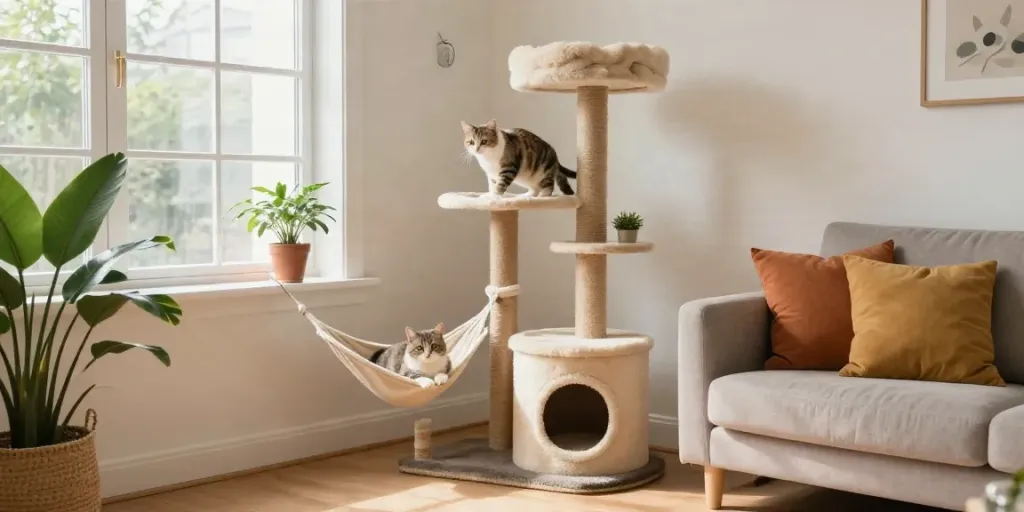
Understanding Cat Towers and Their Benefits
As cat owners, we strive to provide the best environment for our furry companions. A pivotal piece of furniture that has gained popularity in recent years is the cat tower. These multi-level structures not only serve as a play area but also cater to a cat’s natural instincts, providing them with spaces to climb, scratch, and hide. This article delves into the essential aspects of cat towers, exploring their design, benefits, and how to choose the perfect one for your home.
What is a Cat Tower?
A cat tower, often referred to as a cat tree or cat condo, is a piece of furniture designed specifically for cats. It typically features multiple levels, perches, scratching posts, and sometimes enclosed spaces for your cat to hide or sleep. The primary goal of a cat tower is to give cats a safe environment where they can express their natural behaviors such as climbing, scratching, and surveying their territory from a height.
Key Features of a Quality Cat Tower
- Multi-Level Design: A good cat tower should have various levels for climbing and exploring, meeting the needs of adventurous felines.
- Durable Material: High-quality materials such as wood or sturdy synthetic fibers ensure the tower lasts and can withstand the weight and activity of your cat.
- Stable Base: It’s crucial for safety that a cat tower has a wide, stable base to prevent tipping when your cat jumps onto or off of it.
- Scratch Posts: Integrated scratching posts provide a natural outlet for scratching behavior, helping to keep your cat's claws healthy while protecting your furniture.
- Cubbies and Perches: Enclosed spaces offer sanctuary for shy cats, while elevated perches give them a vantage point to survey their surroundings.
Benefits for Your Cat's Health and Happiness
Investing in a cat tower carries numerous benefits for your feline friend. From a health perspective, cat towers promote physical exercise which helps in maintaining a healthy weight. They also encourage mental stimulation, reducing boredom that can lead to destructive behaviors. Furthermore, having designated spaces for climbing and scratching can prevent health issues related to stress or anxiety, fostering a content environment for your cat.
Choosing the Right Cat Tower for Your Home
Size and Space Considerations
When selecting a cat tower, consider the space available in your home. Take measurements to ensure the tower fits without crowding the area. If you live in a smaller space, opt for compact designs that still offer verticality. In larger homes, taller and multi-faceted towers may be more appropriate, allowing multiple cats to enjoy the structure simultaneously.
Material and Construction Quality
The materials used in constructing a cat tower are critical for durability and safety. Look for towers made from solid wood or high-grade MDF, as they provide better stability. Avoid flimsy constructions that might wobble under your cat's weight. Additionally, consider the fabrics used for covering surfaces. Soft, durable materials are essential for comfort and longevity.
Design Styles That Fit Your Décor
Cat towers come in various styles, from modern and sleek to rustic and traditional. Choose a design that complements your home décor while providing a cozy haven for your cat. Nowadays, many manufacturers offer customizable options, allowing you to select colors and patterns that suit your interior aesthetics.
Common Issues with Cat Towers
Stability and Safety Concerns
While cat towers are generally safe, issues can arise with stability, especially in taller models. Ensure that the base is heavy enough to support your cat's weight during play. Additionally, it’s wise to regularly check the structure for signs of wear and tear, ensuring that the tower remains a safe environment for your cat.
Maintenance and Cleaning Practices
Keeping a cat tower clean is essential for your cat's health. Opt for towers with removable covers and washable fabrics to make cleaning easier. Regularly vacuuming the surfaces can help remove fur and dander, while spot-cleaning areas can tackle spills or accidents. Establishing a cleaning routine will ensure the tower remains a healthy space for your pet.
Addressing Your Cat's Preferences
Every cat has unique preferences. Some may prefer enclosed spaces, while others may enjoy open platforms. Take note of your cat’s behavior and consider these traits when choosing a cat tower. For instance, if your cat loves to hide, look for models with cubbies or covered areas. If they enjoy watching from high places, ensure the tower has ample elevated platforms.
Maximizing Engagement with Your Cat Tower
Integrating Playtime with the Cat Tower
The key to maintaining your cat's interest in their tower lies in integrating playtime. Utilize toys that can be attached to the tower, encouraging your cat to jump and play. Consider interactive elements like dangling toys or feather wands that prompt them to engage with the structure. Incorporate daily play sessions to enhance their physical health and strengthen your bond.
Using Accessories for Enhanced Experience
Accessorizing your cat tower can significantly enhance your cat’s experience. Add soft blankets for comfort, or attach toys that provide both stimulation and a challenge. Consider installing a scratching pad or adding ramps if you have older or less agile cats. These additions can make the tower even more inviting and functional.
Encouraging Healthy Behavior with Multi-Level Structures
Multi-level designs can help promote healthy behaviors among cats. Encourage climbing and jumping, which are natural instincts, by positioning treats or toys at various heights. This not only provides physical exercise but also mental stimulation, keeping your cat engaged and happy. Moreover, offering different levels can help reduce territorial disputes in multi-cat households.
Future Trends in Cat Towers (2026 and Beyond)
Innovative Designs and Materials
The future of cat towers is evolving, with innovation leading to design advancements. Expect to see structures made from eco-friendly materials that appeal to conscious consumers. Designs will likely feature even more integrated spaces for relaxation alongside play, focusing on creating serene environments indoors.
Smart Technology Integration
As smart technology becomes more prevalent, we may see cat towers with integrated sensors that monitor your cat's activity levels or health metrics. These advancements will not only provide insights for cat owners but also enhance the overall experience for the pets themselves. Imagine a tower that alerts you when your cat is unusually inactive or offers interactive play features via mobile apps.
Adapting to Evolving Feline Needs
As our understanding of feline behavior improves, so too will the designs of cat towers. Future trends might include features that cater specifically to the various life stages of a cat, offering adjustable heights or modular components that can be adapted as your cat ages.
What size cat tower is best for my cat?
The best size for a cat tower depends on your cat's size and activity level. Generally, a tower should be tall enough to allow your cat to climb comfortably while having spacious platforms for them to rest.
Are cat towers easy to clean?
Many modern cat towers are designed with cleaning in mind, featuring removable, washable covers and surfaces that can easily be wiped down. Regular maintenance goes a long way in keeping the tower hygienic.
How to encourage my cat to use the tower?
Introduce the tower gradually, placing treats or favorite toys on it. Engaging with your cat near the tower can help them associate it with positive experiences.
What materials should I look for in a cat tower?
Look for durable materials such as solid wood, heavy-duty fabric, and sisal for scratching posts. These materials ensure longevity and stability, enhancing your cat's safety.
Do all cats enjoy climbing cat towers?
Not all cats are natural climbers, but many enjoy the vertical space a cat tower provides. Different cats have varying preferences, so it’s essential to consider your cat's behavior when selecting a tower.